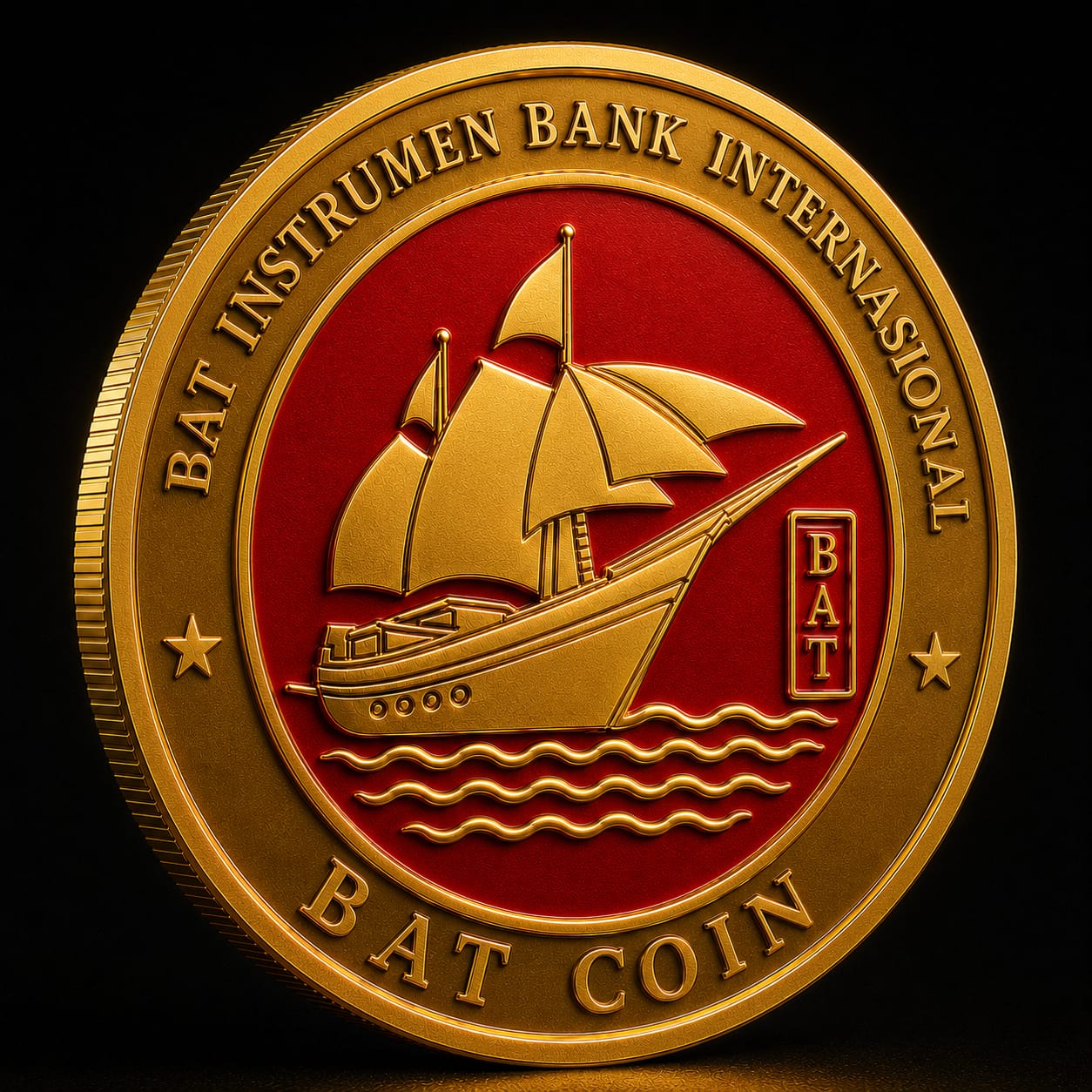
BAT — Institutional Asset Token is an asset-backed ERC-20 digital instrument secured by institutional banking guarantees valued at $600,000,000 USD, issued for the benefit of PT BAT Instrumen Bank Internasional. Structured under the ICC Demand Guarantee rules (URDG 758) and a UCC Article 9 filing framework, with reserves custodied at Citibank N.A., BAT delivers a legally-anchored, auditable bridge between classical banking instruments and on-chain settlement.
For over a century, institutional finance has operated on instruments — guarantees, standby commitments, and security filings — that create trust through legal structure. Blockchain has proven that trust can also be established through mathematics: transparent ledgers, deterministic execution, and immutable records. BAT Institutional Asset Token was conceived precisely at this intersection.
Unlike speculative tokens, BAT operates on a rigid Asset-Backed & Blocked Funds model: institutional demand guarantees with a secured valuation cap of $600,000,000 USD are held for the benefit of PT BAT Instrumen Bank Internasional, with reserve custody administered through a Master Trust framework at Citibank N.A.
To become a reference framework for asset-backed digital instruments across emerging and developed markets — where every token operates within a governance, supply, and legal-reference structure.
To administer BAT under the highest standards of corporate governance; to preserve a fixed, verifiable supply of 600,000,000 BAT aligned with the $600M secured valuation.
To protect stakeholder interests through structural clarity — immutable supply, documented legal references, custodial transparency, and a publicly-stated roadmap toward institutional verification.
Every structural decision behind BAT answers one question: would this design withstand institutional scrutiny? The six pillars below define how the instrument is built, backed, governed, and protected.
ERC-20 standard across EVM networks with access control and blocked-funds logic.
$600M institutional guarantees back the ecosystem — 1 BAT = $1.00 USD.
PT BAT Instrumen Bank Internasional provides the corporate backbone and accountability.
Structured under URDG 758 and UCC Article 9 — frameworks recognized by banks worldwide.
Exactly 600,000,000 BAT will ever exist — no minting function, immutable on-chain.
On-chain blockFunds allows custodians to lock specific amounts for banking requirements.
The baseline security and valuation of the BAT ecosystem are anchored by an ICC Demand Guarantee issued under URDG 758, with reserves custodied in a Master Trust framework at Citibank N.A. This is not a promise of future value — it is a documented, filed, and verifiable institutional structure recorded in public registries.
Trust in institutional finance is never optional — it is the product itself. BAT's legal architecture draws on frameworks banks and corporates have relied upon for decades.
BAT's underlying guarantee is issued under the Uniform Rules for Demand Guarantees by Crown Industrial Loan Company Inc., aligning the instrument with practices recognized in over one hundred countries.
The BAT structure is documented under UCC 3-604 Article (9), File No. 028-2026-000190, recorded with the Cherokee County Clerk of Superior Court of Georgia — a publicly verifiable legal anchor.
Reserves are administered through a Master Trust Account Framework at Citibank N.A. — placing custody within one of the world's most established custodial institutions.
A hard-capped supply, a defined backing ratio, and clearly-allocated categories — every participant can verify the rules of the instrument, today and forever.
| Parameter | Specification |
|---|---|
| Token Name | BAT Institutional Asset Token |
| Symbol | BAT |
| Standard | ERC-20 · OpenZeppelin |
| Supply | 600,000,000 BAT — fixed |
| Backing Ratio | 1 BAT = $1.00 USD |
| Valuation Cap | $600,000,000 USD |
| Decimals | 18 |
| Minting | None — supply immutable |
| Underlying | ICC Demand Guarantee (URDG 758) |
| Legal Framework | UCC Article 9 |
| Custodian | Citibank N.A. |
| Administrator | PT BAT Instrumen Bank Internasional |
Subject to final governance confirmation prior to mainnet deployment.
600,000,000 × 1018 · Immutable, verifiable on-chain.
Four phases in 2026 — from legal foundation, through development and mainnet deployment, toward global institutional expansion.
Conceptual and legal groundwork: instrument architecture and governance model.
The digital layer takes shape: contract development and internal review.
The instrument goes live: mainnet deployment under multi-signature governance.
With the foundation secured, BAT extends its reach across the ecosystem.
Solidity ^0.8.20 · preview implementation. Institutional features — role-based access control, the blocked-funds mechanism, and emergency pausing — are enforced at the contract level.
// SPDX-License-Identifier: MIT
pragma solidity ^0.8.20;

contract BATInstitutionalAssetToken {
    bytes32 public constant CUSTODIAN_ROLE = keccak256("CUSTODIAN_ROLE");
    uint256 public constant MAX_SUPPLY = 600_000_000 * 10 ** 18;

    mapping(address => uint256) private _blocked;

    event FundsBlocked(address indexed holder, uint256 amount);
    event FundsUnblocked(address indexed holder, uint256 amount);

    function blockFunds(address holder, uint256 amount)
        external onlyRole(CUSTODIAN_ROLE)
    {
        _blocked[holder] += amount;
        emit FundsBlocked(holder, amount);
    }

    // no mint() — MAX_SUPPLY is fixed forever
}
Always verify the contract address before interacting. The address below is the only officially deployed BAT Institutional Asset Token contract. Bookmark this page and copy with one tap.
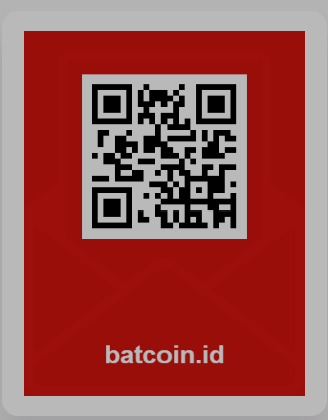
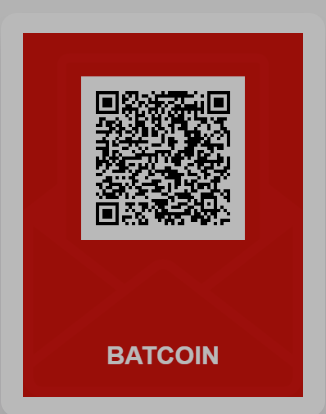
Point your mobile camera at the QR codes below to instantly open the official website or verify the smart contract address on-chain. Perfect for institutional meetings, conferences, and print materials.
Scan with any smartphone camera — no app required. Both QR codes redirect to verified, official BAT resources only.
Security is not a checkpoint but a continuous process — from code review to independent third-party audit.
AccessControl separates administrative, custodian, and emergency roles.
blockFunds/unblockFunds restricted to authorized custodian roles only.
ERC20Pausable enables administrators to pause transfers if mandated.
Mainnet admin controlled by Gnosis Safe multi-signature wallets.
Independent audit by accredited security firms before production.
Deployed contracts verified on public explorers; UCC filing publicly accessible.
BAT (Institutional Asset Token) is an asset-backed ERC-20 digital instrument administered by PT BAT Instrumen Bank Internasional. It combines a blockchain token layer with a documentary framework anchored by an ICC Demand Guarantee (URDG 758), a UCC Article 9 filing, and master trust custody at Citibank N.A.
The ecosystem is anchored by institutional banking guarantees with a secured valuation cap of $600,000,000 USD, issued for the benefit of PT BAT Instrumen Bank Internasional, with reserves custodied in a Master Trust framework at Citibank N.A. The structural backing ratio is 1 BAT = $1.00 USD.
No. The institutional backing operates at the corporate level for the benefit of PT BAT Instrumen Bank Internasional. Ownership of BAT does not, by itself, grant a direct claim, legal right, or redemption right to any underlying asset. Please read the Legal Disclaimer in full.
To satisfy banking requirements such as collateral freezing or dispute resolution, authorized custodian roles can lock specific token amounts directly within a holder's address (viewable via blockedBalanceOf). The remaining unblocked balance stays freely transferable.
The hard cap mirrors the $600M secured valuation cap at a 1:1 ratio. The smart contract contains no minting function: after deployment, total supply is immutable and verifiable by anyone on-chain.
Use the official contract address displayed in the Contract Address section above, or scan the QR code in the QR Code section. Always confirm the checksummed address matches exactly before sending any transaction. BAT administrators will never ask you to send funds to an unverified address.
BAT targets EVM-compatible networks, with initial deployment planned under multi-signature (Gnosis Safe) governance, followed by public contract verification and documentation of all deployed addresses.
Guarantee structures, custody arrangements, technical architecture, compliance methodology, and risk factors — documented in full within the official Whitepaper v2.0.
1. No automatic individual claim. The institutional backing described on this website — including the $600,000,000 secured valuation cap — is held for the benefit of PT BAT Instrumen Bank Internasional at the corporate level. The purchase or ownership of BAT tokens does not automatically confer a direct ownership claim, legal right, or redemption right to physical assets, custodial accounts, or underlying financial instruments on an individual basis. Any rights, benefits, and value distribution are determined exclusively by the corporate structure, the applicable contractual documents, and the laws of the relevant jurisdictions.
2. Framework references. References to URDG 758, UCC, Citibank N.A., Crown Industrial Loan Company Inc., and Troptions Corporation Inc. describe the structural and documentary framework of the instrument. They do not constitute an endorsement by any regulator, banking institution, or standards body, and do not by themselves create enforceable rights in favor of token holders.
3. Informational purposes only. This website and its contents are provided for informational purposes. Nothing herein constitutes a securities offering, investment advice, or a guarantee of token value or performance. Digital assets are subject to market, technological, and regulatory risk. Prospective participants should conduct independent due diligence and consult qualified advisors before engaging with the instrument.